hawg·wash BBQ (hôgwôsh, -wsh, hg-)

hawg·wash BBQ (hôgwôsh, -wsh, hg-) KEY


NOUN:


1. Worthless, false, or ridiculous speech or writing; nonsense.

2. Garbage fed to hogs; swill.


Monday, March 14, 2011

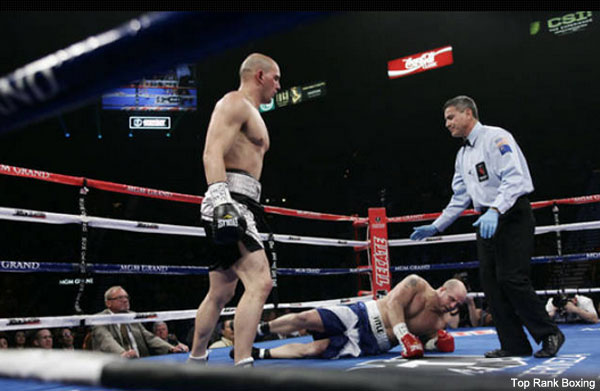
Zbikowski (2-0) scores a first-round TKO with a body shot. Bring on Ocho!!!


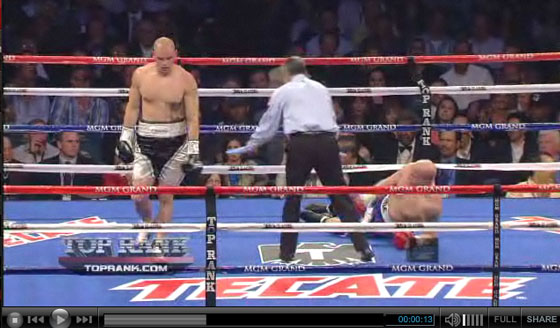
Las Vegas _ Tom Zbikowski is accustomed to crushing ribs when he's on the football field. He used the same principle tonight in the ring at the MGM Grand Garden Arena in Las Vegas.
Zbikowski, a safety for the Baltimore Ravens, drilled Richard Bryant with a left hook to the ribs. The flabby Bryant stood for a second and then crumbled to the floor. He rose to his feet at the count of seven, but referee Russell Mora didn't he feel he was able to go on. Zbikowski picked up his second professional win at 1:45 of the first round.
Zbikowski, a former All-American at Notre Dame, last fought in 2006. With the NFL lockout looming, Zbikowski decided it was time to step back in to the ring. He fought 100 times as an amateur and said before the fight, he's always wanted to get back in the ring.
As an opponent, Bryant was about what you'd expect a guy with one pro fight to face. Give Bryant some credit, he stood toe-to-toe with the NFL player and blasted him with a few thumping rights. Zbikowski, giving away 32 pounds, walked right through the shots. If Zbikowski chooses to makes a run at a legitimate boxing career he'll have to go to battle at cruiserweight, one of boxing's least glamorous divisions. He plays football around 215 pounds. He weighed in yesterday at 193.
Not all NFL players are interested in simply managing their money during the lockout, some are out to make sure they're earning while the pads are in lockup.

For the time being, Baltimore Ravens safety Tom Zbikowski has taken up a side gig. Zbikowski, a three year NFL veteran with a long amateur boxing career, won his second professional fight on Saturday night. You think his $50,000 payday was some sort of publicity stunt? Think again because he's already got another fight scheduled in less than two weeks on Mar. 26 in Atlantic City.
"It's fun boxing because it's only you. You can't look to your left or right for teammates, you gotta be ready," Zbikowski (2-0) said. "Football is a lot fun to play but here's nothing like fight night. It was the first time in a long time. It's gonna be a very good learning experience."

Zbikowski's first pro fight since 2006 didn't last very long. With a body shot, he floored and took out Richard Bryant in just 1:45. "Tommy Z" showed he can roughhouse. He stood toe-to-toe banging away with the pudgy Bryant. At one point, Bryant tried to clinch and Zbikowski tossed him on his like a running back.

Zbikowski even ate a few solid right hands from Bryant. The former Notre Dame star was asked if he was looking for something more spectacular than a finish on a body shot.

''I was looking to get a little more work but you take a win any way you can get it. I know I hurt him with the hook, you could feel the air come out, '' Zbikowski said. "You're never disappointed in a knockout. It felt good to deal with the adrenaline drop and know without a doubt I was going to be able to go four rounds. I felt like i was in very good shape."
Fighting in front of 7,247, the adrenaline drop worried Zbikowski the most. Boxers and MMA fighters often talk about "gassing" themselves because they get too excited early in a fight.

"You have to control it in boxing, because in football maybe that first series you get real excited. The warm up in boxing is far, far more important than in football," Zbikowski. "I learned a lot from that first fight in not going out and bum rushing the guy. Give him a couple of moves, feel him out a little bit. A lot of guys aren't used to the pressure of the bright lights. You gotta use everything to your advantage."

Zbikowski said it's a wait and see deal with the lockout. He's happy the players are sticking together in this struggle vs. the owners.

"We're not sure with what's gonna happen next year, but it's awesome to see the team unity. It's a real brotherhood," said Zbikowski.

Zbikowski fights on the undercard of an HBO telecast featuring Yuriorkis Gamboa vs. Jorge Solis in the main event.

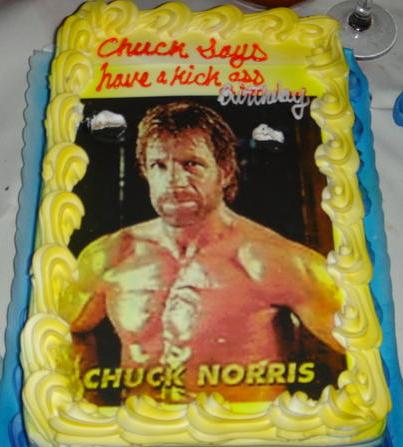
Happy Steak & RH Day!!


Happy Pi Day


Happy 61st Birthday, Rick Dees


Friday, March 11, 2011

Obama greets hometown Stanley Cup champs


Obama welcomes Hawks to White House


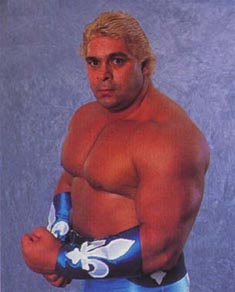
RIP, Dino Bravo 1993


On March 11, 1993, Bresciano was found shot to death.[1] He was 44 years old. Bresciano was thought to have been shot up to 7 times with 2 shots to the head by a gunman while watching hockey in his Vimont, Laval, Quebec apartment. It is widely believed that his alleged role in illegal cigarette smuggling in Canada led to his murder. Rick Martel has stated in interviews that because of Bresciano's notability from being a popular professional wrestler, he was able to attract many customers (specifically Aboriginies) to switch over to having him as a supplier of illegal cigarettes, thus crossing the mafia. According to Bret Hart's autobiography Hitman: My Real Life in the Cartoon World of Wrestling, right before his death Bresciano had confided to close friends that he knew his days were numbered.
He was a nephew by marriage of Montreal crime boss Vic Cotroni, and was believed by authorities to be involved in his organization for some time.

Who I'm I?


Happy 46th Birthday!!!!


Vinnie Paul

RIP, Oscar Mayer


Illinois Hall of Fame: Oscar Mayer

Oh I wish!... Oh I wish I were an Oscar Meyer weiner! That is what I truly wish to be! 'cause if I were an Oscar Meyer weiner! Then everyone would be in love with me!

Oscar F. Mayer was the founder of the Oscar Mayer meat products company. Mayer was born in Bavaria on March 29, 1859 and emigrated to Detroit, Michigan in 1873 at the age of 14 to work as a butcher's apprentice.
Oscar moved to Chicago in 1876 when he was 17 to work for Kohlhammer's Market and then worked six years for the Philip Armour & Company meatpackers at the Union Stock Yards. By 1883 his brother Gottfried Mayer had moved to Chicago from Nurnberg, Germany where he had established himself as a "wurstmacher" or sausage-maker and ham curer. Oscar had saved enough money to lease a failing business, the Kolling Meat Market, in a German neighborhood on the near north side.

From their first week in operation, the business was very popular due to Gottfried's skill in producing the products that Germans in Chicago remembered from back home. Their jealous landlord refused to renew their lease in 1888 because he wanted to take over the business himself. But without the Mayer brothers, his store failed in a year. A third Mayer brother, Max, came over from Germany about 1888 to join the company as a bookkeeper when they built a new two-story building two blocks from the first location and lived in apartments over the store.
Mayer products were very popular with Chicago's growing German-American immigrant community in the 1890s. They sold "Old World" sausages, Westphalian hams, brockwurst, liverwurst, bacon, and wieners--later called hot dogs by Americans not of German heritage. The company was first called Oscar Mayer and Brother and then Oscar Mayer & Company. In 1893, they were sponsors of the German display at the Columbian Exposition in Chicago. They also sponsored German polka bands. The German market in Chicago was important. According to the census of 1900, one in four residents of Chicago, about 470,000 people, were either born in Germany or had at least one parent who was born there. The next largest immigrant group was the Irish and they also liked the Mayer products.
At the start of the twentieth century, Oscar Mayer had a work force of 43 people including eight wagon drivers who made deliveries to 280 stores all over Chicago and suburbs as well as in Wisconsin. The standard practice for meat sellers in 1904 was to rely on sales people and remain anonymous as to the packer or retailer. The idea of retail brand names in food and consumer advertising was still fairly new in the early 1900s. As in the case of Charles R. Walgreen who started branding his drug stores 100 years ago, Oscar Mayer put his brand name on retail meat products in 1904.
The Mayers were very concerned with quality control. In 1906 they became one of the first companies to volunteer for participation in a new federal meat inspection program to certify the purity and quality of products. Naturally, the company advertised that they were government-inspected as a distinctive selling point. Just after World War I, Oscar Mayer & Company made its first large expansion with the purchase of a processing plant in Madison, Wisconsin.
In 1909, Oscar's only son, Oscar G. Mayer, graduated from Harvard University and joined the family business. One year at a time, Mayer launched many innovations to set his brand names apart from the competition. Newspaper display ads started talking about Oscar Mayer "Approved Brands" in 1917 and in 1924 Mayer introduced sliced bacon and special packaging that was patented. In 1928, Oscar F. Mayer became Chairman of the Board and his son Oscar G. Mayer was made president. In 1929, the company introduced yellow band weiners.
A yellow paper band was a great gimmick because most wieners at that time were sold in bulk and with no packaging other than a display box. Mayer employees applied individual yellow paper bands by hand that carried the company name and the U.S. government inspection stamp.
Oscar F. Mayer was interested in politics but was usually too busy running his own business to take too much time for campaigns. He was an Illinois delegate to the Democratic National Conventions of 1920 and 1928. His son Oscar G. Mayer was born in Chicago in 1888 and lived in Evanston. Oscar G. Mayer also was elected as a trustee of the University of Illinois from 1935 to 1941.
In 1936, Oscar F. Mayer came up with another classic advertising gimmick at the suggestion of his nephew. It was a custom-made vehicle that looked like a giant wiener on a truck body with wheels and it was and is today called the Wienermobile. It became a rolling billboard for Oscar Mayer to be driven in parades and around Chicago and suburbs. Modern-day versions of the Wienermobile pictured at right tour all over the country. There are several similar vehicles in the US and other countries that visit schools and youth camps. Due to TV commercials over more than fifty years that featured the vehicle, the Weinermobile is one of the most recognized custom vehicles in the country and an icon of American pop culture. It has been worth millions of dollars in brand name awareness advertising to the company, far in excess of its cost to operate and maintain.
For about 36 years between 1940 and 1976, a little person dressed as a chef by the name of "Little Oscar," was the goodwill ambassador for the company who travelled with the Wienermobile. He was played by George Molchan, who had auditioned on the recommendation of one of his friends who played a "Munchkin" in the 1939 film, The Wizard of Oz. George would pass out plastic "wiener whistles" to kids at each stop the Wienermobile made. In 2005, Mr. Molchan died at age 82 in Merriville, Indiana.
Oscar F. Mayer died on March 11, 1955 just a few weeks before his 96th birthday. He is buried at Rosehill Cemetery in Chicago. After his death, his son and grandson remained active with the company and the corporate headquarters moved from Chicago to Madison, Wisconsin to be closer to the main plants. Under both Oscar G. Mayer, and Oscar G. Mayer, Jr., the company continued to innovate with special vacuum sealed packaging in the 1950s and other ways to guarantee freshness. In 1971, the Oscar Mayer packaged meats were first to print "use by" dates on products.
Starting in 1963, Oscar Mayer & Company used a jingle that many generations of children have memorized. "I wish I were an Oscar Mayer Wiener" is the longest continuously used commercial jingle in the history of American advertising. Another famous jingle taught children how to spell "baloney" as "balogna" with a first name of O-S-C-A-R and a last name of M-A-Y-E-R.
In 1981 Oscar Mayer & Company was acquired by General Foods, a company founded in the 1920s by Marjorie Merriweather Post of Springfield, Illinois. In 1989, Mayer was again merged with the company founded by Chicagoan James L. Kraft, Kraft Foods. Oscar Mayer meat procucts, Post cereals, and Kraft Foods, all have deep founder and family roots in Illinois with Oscar F. Mayer, Charles W. Post, and James L. Kraft. Kraft Foods Division became part of the Altria Group parent company in 2003.
Today there are many things in Illinois named for Oscar F. Mayer including The Oscar F. Mayer School at 2250 N. Clinton in Chicago.

Thursday, March 10, 2011

Happy 71st Birthday!!!!


RIP, Les Anderson, 1 year ago today


We love you Corey.

Happy International Day of Awesomeness


RIP, 17 years ago yesterday.


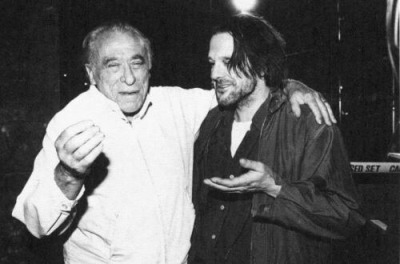
Charles Bukowski
He marked by an emphasis on the ordinary lives of poor Americans, the act of writing, alcohol, relationships with women and the drudgery of work. Bukowski wrote thousands of poems, hundreds of short stories and six novels, eventually having over 60 books in print. In 1986 Time called Bukowski a "laureate of American lowlife".